

How does one find a local tradie or a medical specialist when in an emergency? In olden days, one would reach out to the “Yellow Pages”, but today, it’s as simple as pulling out the phone and typing “emergency plumber near me” or “NDIS provider Brisbane” straight into Google. That is just how modern Australians buy.
The numbers back this up. Around 46% of every single search on Google has a local intent. People are looking for businesses right around the corner. Yet, so many business owners make the exact same mistake: they invest thousands into a gorgeous website, but completely forget to tell Google where their office or workshop actually sits. Calibrating the Google Business Profile to reach local customers is one of the wisest steps to reach the right customers.
In this blog, we present a detailed explanation of how a well-created Google Business Profile drives your local online visibility.
What is a Google Business Profile?
Think of a Google Business Profile (GBP) as a digital shopfront window. It is a completely free tool, but it gives an enterprise total control over how the brand shows up on Google Maps and local search results. For a local customer hunting for a specific service, this profile is almost always their very first impression.
Local SEO is entirely about targeting buyers within a specific geographic area, unlike broader national campaigns. A Google profile makes this happen by holding all the vital operational facts. It displays the real trading name, phone numbers, website links, current operating hours, and service areas. The platform also gathers customer reviews, handles direct messaging, and shares quick business updates. The payoff for keeping this data fresh is huge. Google’s own data shows that fully complete profiles get seven times more clicks and 70% more physical location visits than listings left half-done. It gives consumers the fast, verified facts they need before making a call.
How GBP Supercharges Your Local SEO
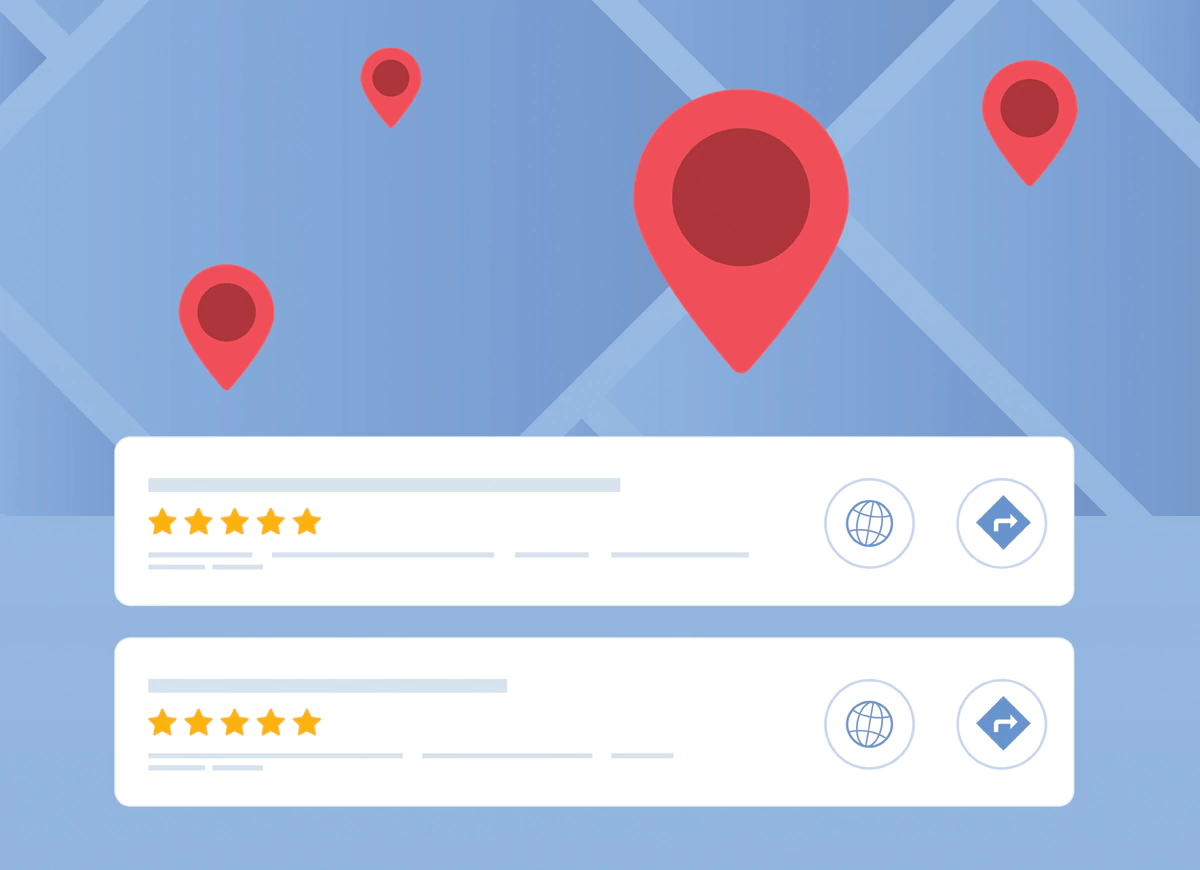
To see how a profile changes the SEO game, look at how Google handles local search results. Type in a local service, and Google drops a prominent map snippet right at the top of the page. In the digital marketing world, this is called the “Local 3-Pack”—the top three local businesses chosen by the algorithm.
This map space appears in about 93% of searches with local intent, and it hooks over 42% of all user clicks. If a business is missing from those top three map spots, it is basically handing half the local market straight to direct competitors. The business profile is the only entrance into this space. Local search experts find GBP setup signals make up roughly 32% of the total ranking weight for map results. Nothing else has that kind of impact.
Google uses three specific rules to decide who wins those top three spots: relevance, distance, and prominence.
- Relevance: This is how well a listing matches what someone typed. By filling out the profile’s service list with normal, everyday language, the algorithm can instantly match the business to buyers with high intent.
- Distance: This is how close the workshop or office is to the person searching. No one can change where a customer is standing, but setting service areas accurately ensures Google knows exactly which postcodes the team handles.
- Prominence: This comes down to how active and trusted the brand looks. Google tracks this by looking for real-time activity, like weekly update posts, fresh project photos, and steady customer responses.
Then there is the massive ranking power of customer reviews. Reviews are not just nice compliments; they function as heavy algorithmic signals. The number of reviews, how recently they were posted, and the overall star rating tell Google that a business is reliable. Research shows that 31% of consumers will only trust a local business if it holds a 4.5-star rating or better. Plus, listings that consistently get new reviews see a 21% jump in local search views compared to static profiles.
Best of all, this map traffic converts incredibly well. Local searchers are rarely just window-shopping. They usually have an immediate problem, a wallet ready, and they want to hire a professional on the spot. Because a sharp profile catches consumers exactly at this point of purchase, it turns casual online clicks into actual paying clients far faster than standard website links.
Maximising Your Profile: DIY vs. Professional Management
Claiming a basic listing is pretty simple. But consistently beating out entrenched competitors who have held the top spots for years? That takes serious work. A common trap for small business owners is the “set and forget” mindset wherein other business operations can prevent you from consistently updating the website.
Sustaining a top map position requires constant care. It means uploading geo-tagged job photos, posting weekly updates, and managing incoming reviews. There are technical traps to avoid, too. Simple mistakes like stuffing extra keywords into a business name or picking the wrong service categories can cause negative impacts. Partnering with a professional digital agency shifts a basic map listing into a serious, automated lead-generation asset. While business owners focus on running daily operations, digital experts handle the algorithm to keep the brand locked at the very top of the local map.
Concluding Words
Winning the local market means showing up exactly where the local community is looking. A properly optimised Google Business Profile puts a brand right in front of high-intent buyers, turning everyday online searches into real business growth. It is the most direct way to build local trust, establish market authority, and keep a steady pipeline of incoming jobs flowing without relying on guesswork.
Ready to secure a permanent spot in the Google Local 3-Pack and outpace the local competition? Get in touch with our team at Make My Website today, and let’s build a tailored local SEO strategy that drives real commercial results.












 1300769302
 info@makemywebsite.com.au